Limits
Limits of functions:
There are many ways to interpret a function:
- As a formula
- As a machine model
- As an arrow diagram
- As a graph
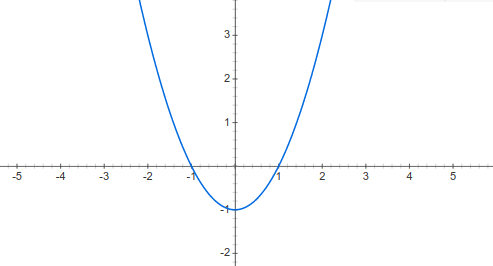
Limits
Let
We say
if f(x) tends to L whenever x tends to c.
- the limit point c does not need to be an element of D
- while x approaches c (but is never equal to c), it must be an element of D.
Replacement info
If
One-sided limits
We say
if f(x) tends to L when x approaches c from the left.
if f(x) tends to L whenever x approaches c from the right.
info
- The limit lim does not exist if one of the following is true:
- the left limit does not exist. -
- the right limit does not exist. +
- both the left and right limit exist but they are not equal.
Limits to infinity
Definition
We say
WARNING
Even if
Well behaved functions
well behaved functions:
- polynomials
- exponential functions
- logarithms
- sine
- cosine
because a limit to a point c in the domain of f can be calculated by direct substitution.
Replacement Rule
info (weak)
If
info (strong)
Let I be an open interval containing c. If
Limit Laws 📜
Assume that both
| Name | Rule |
|---|---|
| Sum Rule | |
| Difference Rule | |
| Constant Multiple Rule | |
| Product Rule | |
| Quotient Rule | |
| Power Rule | |
| Root Rule |
Indeterminate forms:
A limit is called an indeterminate form if applying the limit laws leads to an indecisive result.
| limit law | Indeterminate Situation |
|---|---|
| Difference Rule | |
| Product Rule | |
| Quotient Rule | |
| Power Rule |
The Conjugate Trick
- The conjugate trick is based on the following identity: (a + b)(a - b) = a^2 - b^2
- a + b is the conjugate of a - b (and vice versa)
The sandwich info
- Let f, g and h functions such that
- f is "sandwiched" between g and h.
info
If
Continuity at a point.
Definition
Let
if a < c < b, then f is continuous at c if
Endpoints:
if c = a or c = b, then f is continuous at a if
and f is continuous at b if
Practical approach 🔍
Continuity Test
A function f(x) is continuous at an interior point c of its domain if and only if
- f(c) exists -> c lies in the domain of f.
exists -> f has a limit as x approaches c. -> the limit equals the function value.
- If one (or more) of the conditions is not satisfied, f is not continuous at c.
Discontinuities:
In all following cases f is not continuous at c:
| Functions | c | Violation |
|---|---|---|
| 1 | f is not defined at c |
Laws of continuity 📜
Assume that f and g are continuous at c, then the following combinations are continuous at c.
| Name | Rule |
|---|---|
| Sums | |
| Differences | |
| Constant Multiples | |
| Products | |
| Quotients | |
| Powers | |
| Roots |
Composition of continuous functions:
info
If f is continuous at c, and g is continouous at f(c), then
- the composition
is the function that maps x to g(f(x))
Global continuity
Definition
- Let I be an interval in
. A function f is continuous on I if for all the function f is continuous in c. - A function f is continuous if f is continuous on its domain.
Formula functions
Definition
A formula function is a function constructed from elementary functions:
- polynomials
- power functions
- trig functions
- exp functions
- logarithms
and using algebraic operations like:
- add
- subtraction
- multiplication
- division
- composition
- All formula functions are continuous.
- For all formula functions f and for all
: